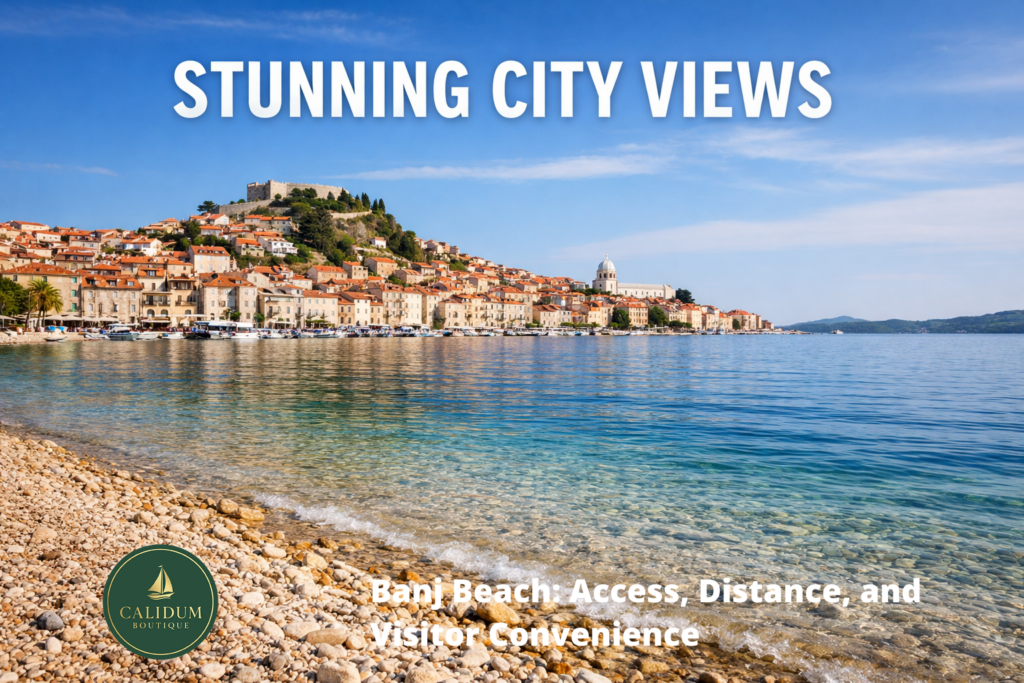
Banj Beach is on the eastern side of Šibenik, positioned along the Adriatic shoreline with clear water, fine pebbles, and a direct view of St. Michael’s Fortress. The setting connects the coastline, promenade paths, and nearby urban structures. The beach contains organized zones such as sunbathing areas, sports sections, and recreation points, including playgrounds, volleyball courts, and shaded seating. Access stays simple through paved paths and nearby parking if visitors arrive early. The coastline frames island views such as Zlarin and Prvić, and the shallow entrance supports safe swimming when currents remain calm.
Banj Beach is popular because clear water, fine pebbles, and panoramic city views appear in one location. Visitor flow stays high due to cafés, shaded spots, monitored swim zones, and rental points such as loungers and umbrellas. Activities such as volleyball courts, beach bars, and children’s play areas support families, couples, and solo travelers. The water quality remains clean with safe microbiological values and regular monitoring. Swimming conditions remain favorable through shallow entry, calm currents, and buoy-marked areas if weather remains stable. The shoreline provides a safe environment for children because the gradual slope and soft seabed reduce risk.
Banj Beach is 1.3–1.7 km from Šibenik Old Town, forming a walkable coastal route of 15–20 minutes. The path includes viewpoints, benches, and terrace overlooks. The beach stays accessible by bus line 3, taxis, or car via nearby parking zones, such as marked rows near the waterfront. The location supports leisure visits through amenities such as showers, bars, restrooms, and sports areas. Evening visits provide views of the fortress and city panorama. The beach remains a recommended stop because proximity to Old Town, clean water, and structured visitor areas reinforce the overall experience.
Where is Banj Beach located?
Banj Beach is located on the eastern side of Šibenik near the Adriatic coast. The location forms a defined coastal zone with clear water, fine pebbles, and a direct view toward St. Michael’s Fortress. The setting strengthens the spatial context because the beach connects the shoreline, promenade paths, and nearby urban structures.
The beach environment contains organized areas such as sunbathing sections, sports zones, and recreation spots, such as playgrounds, courts, and walking routes. These areas include variations, such as children’s playgrounds, volleyball courts, and shaded sitting points. The location maintains easy access through paved paths and nearby parking areas if visitors look for proximity. Dienstleistung for visitors includes simple amenities such as showers, rental points, and refreshment stands.
The coastal setting forms a continuous visual frame with islands, such as Zlarin and Prvić, if visitors look toward the open sea. The beach maintains a shallow entrance, stable ground, and structured swimming zones. The final context remains tied to the core query because every attribute reinforces the location description.
Why is Banj Beach popular?
Banj Beach is popular because it does clear water, fine pebbles, and direct views of the city’s stone walls in one location. The beach location attracts visitors due to accessible entry points, shaded areas, and nearby cafés if visitors prefer comfort. The same location maintains high popularity due to safe swimming zones, such as marked lanes and monitored sections.
Banj Beach popularity increases because the beach provides varied activities, such as volleyball courts, beach bars, and rental options, such as umbrellas and loungers. The same activities create high user satisfaction because they support groups, such as families, couples, and solo travelers. The same support increases stay duration if visitors search for relaxing environments.
Banj Beach stays relevant because the setting provides proximity to historic districts, such as the Old Town, museums, and promenade paths. The same proximity creates strong visitor flow because travelers prefer integrated experiences, such as swimming and sightseeing. The same flow reinforces demand if travelers prioritize accessible recreation.
Is Banj Beach worth visiting?
Banj Beach is worth visiting due to its maintained Blue Flag status, clear water quality, family-friendly access, and proximity to the old town of Šibenik. The beach has a pebble layout and frontal views of historical landmarks. Entry is free. Amenities include showers, lifeguards, bars, and sports zones. Water clarity supports swimming and snorkeling. Proximity to cultural sites improves visit density if combined with old town walks.
Amenities support comfort across visit durations. There are bars, restrooms, sunbeds, and a water slide. Local parking is limited. Arrive early to secure parking close to the beach. Popular months are July and August. Water activities occur daily in peak season. Visitors use it for leisure and sunset views. The surface is primarily pebbles with limited sand areas. Entry is shallow near shore, suitable for children.
Noise levels rise in high season. The beach contains a concrete section for sunbathing and easier access. Café seating faces the sea. Evening visits provide view of St. Michael’s Fortress. Visitors photograph the city panorama from the edge. Multiple visitors report return visits due to accessibility and view. Safety measures include regular cleaning and designated swim areas. Conditions remain favorable unless weather changes.
How do you get to Banj Beach?
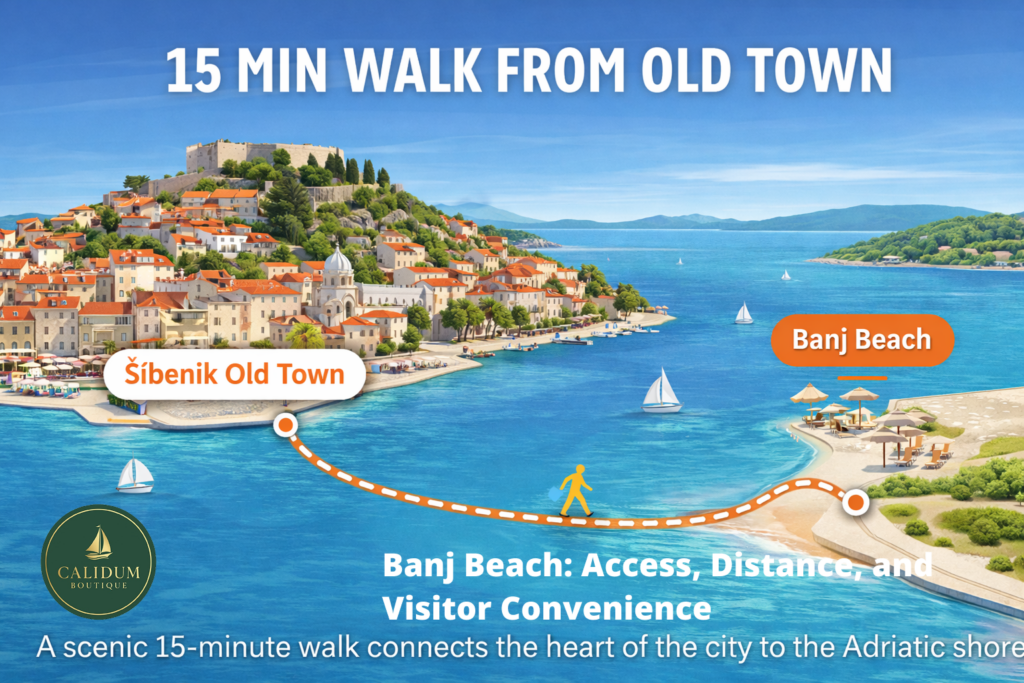
You can get to Banj Beach by walking 15 minutes from Šibenik city center via the waterfront promenade.
The route starts at Obala dr. Franje Tuđmana, continues along the coastal footpath passing landmarks such as St. Michael’s Fortress, and leads directly to the beach entrance. Walking is the shortest and most direct method from the Old Town.
Banj Beach is accessible by public transport using Šibenik’s city buses. Bus line 3 departs from the Šibenik main station and stops near the beach entrance, especially during summer. Tickets are available at kiosks, with increased frequency during tourist months. Travel time by bus is under 10 minutes if departing from central stops.
Taxis and ride services such as Bolt provide direct access. The location is pinned in navigation apps using the coordinates 43.7355° N, 15.9015° E. Driving from surrounding Dalmatian towns such as Vodice or Primošten takes 20–30 minutes using D8 coastal road. Parking is available near the beach, but limited in peak season.
How far is Banj Beach from Šibenik Old Town?
Banj Beach is 1.7 km from Šibenik Old Town. The distance remains walkable, and the route forms a direct shoreline link, which improves orientation for visitors if weather conditions remain stable.
The distance stays relevant to Šibenik Old Town because the shoreline path maintains visual continuity, and this continuity improves route clarity. The route contains viewpoints, such as the St. James area and small harbor sections, and these viewpoints include examples such as promenade benches and lookout terraces. The path frames the travel time because the 1.7 km route produces a short walk in normal conditions.
The distance supports access planning because the short route lowers travel effort for visitors, and this travel effort helps families, swimmers, and walkers. These visitors represent groups, such as tourists and local residents, and these examples reflect typical movement patterns. The 1.7 km metric remains the key attribute because the spatial relationship between Banj Beach and Šibenik Old Town improves navigation precision if the traveler seeks a predictable walking segment.
Is Banj Beach within walking distance of Šibenik?
Banj Beach is within walking distance of Šibenik with a direct coastal route that measures about 1.3–1.6 km. The route uses paved paths and short residential segments and creates a steady walking time of 15–20 minutes. Walking distance remains consistent during the summer months, if the starting point is the city center.
Banj Beach stays connected to Šibenik with continuous pavement, marked viewpoints such as the Šibenik Bay overlook and the city promenade, and direct access points. Walkers use the same route segments, such as the Obala palih omladinaca section, if they want constant visibility of the sea. The beach offers facilities such as cafés and changing areas, for example small kiosk cafés and open-air showers.
The walking route maintains a stable orientation toward the city because the coastline shapes the movement and anchors the perspective toward landmarks such as St. Michael’s Fortress and Šibenik Port. The route preserves short-distance transport conditions if the visitor prefers a non-vehicle approach. The walking experience develops stronger spatial clarity when the visitor follows visible shoreline references such as boats, piers, and seating areas.
Is there parking near Banj Beach?
There is parking near Banj Beach because the area includes marked public parking zones close to the beach entrance. The parking zones include street parking and small public lots near the waterfront, such as street rows on Put Firula and small bays near the access path. The parking zones give short walking distance to the beach entrance if visitors arrive early.
The parking availability near Banj Beach depends on time, traffic density, and seasonal demand near the waterfront. The waterfront zone includes parking rows, scooter bays, and bicycle racks, such as scooter bays near the promenade and bicycle racks next to the cafés. The parking availability stays higher in morning hours if crowds gather later in the day.
Is Banj Beach good for swimming?
Banj Beach is good for swimming. The water does calm currents in most hours, and the shallow entry increases safety for swimmers who prefer gradual depth. The beach does clean gravel terrain that supports stable footing if waves rise in short intervals.
The swimming experience does improve when clear visibility appears in midday periods. The water clarity creates reliable orientation for swimmers who search for stable zones, such as marked areas and buoy sections. The shoreline maintains managed access which improves control of crowd density if peak hours occur in summer.
Is the sea at Banj Beach clean?
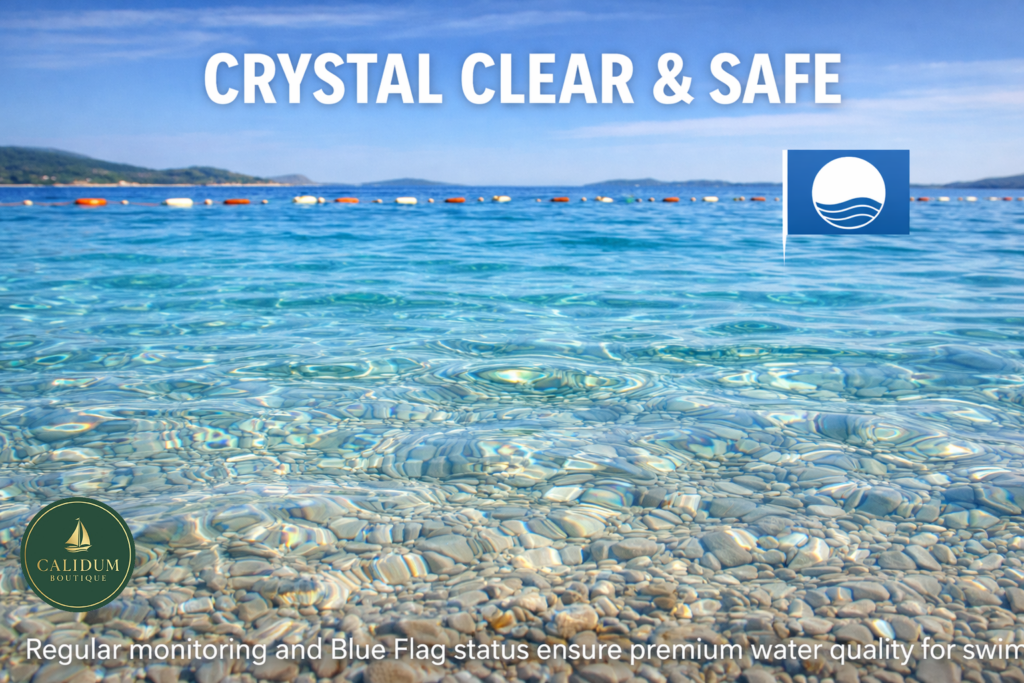
The sea at Banj Beach is clean. The clean water forms stable clarity because the coastline has consistent circulation and low urban runoff. The stable clarity reflects monitored values such as transparency levels, microbiological indicators, and seasonal readings. The seasonal readings stay within safe limits for swimming, if rainfall increases temporary turbidity.
The clean water at Banj Beach supports safe swimming. The safe swimming conditions rely on measured parameters such as coliform counts, temperature readings, and salinity values, with coliform counts being the main health indicator. The health indicator remains low across summer periods, if local authorities perform frequent sampling. The frequent sampling improves water reliability and increases visitor trust.
Is Banj Beach safe for children?
Banj Beach is safe for children because the shallow shoreline, calm water, and soft entry reduce risk during bathing activities if supervision stays consistent.
The shallow shoreline improves safety because the water depth stays low over a wide zone. The calm water improves stability because the bay reduces strong waves during normal weather conditions if wind intensity increases later in the day. The soft entry improves comfort because the smooth seabed protects feet from sharp surfaces such as rocks, shells, and pebbles.
Does Banj Beach have shallow water?
Banj Beach has shallow water. The shoreline forms a long gradual slope that keeps depth low near the entry point. The shallow zone increases safety for swimmers and children if currents stay calm.
The shallow water creates stable footing across sandy sections and pebble sections, such as the lighter pebbles near the north side or the mixed grains near the central path. The gradual slope supports longer wading distances in clear visibility conditions. The same slope improves comfort for families if wave activity remains low.
What are accommodation options in Šibenik?
Accommodation options in Šibenik include boutique suites, private apartments, coastal hotels, and countryside stays. This accommodation variety does lodging, service variation, and location differentiation with clear examples such as Calidum Boutique Suites in Bilice. The options in Šibenik create lodging diversity through seafront hotels such as properties near Banj Beach, through private apartments such as units in the Old Town, and through countryside houses such as stays in Bilice. You can stay in Calidum Boutique Suites in Bilice for a quiet setting near Šibenik if a visitor wants proximity to the city.